The plank, rebuilt from the ground up
Why the most familiar exercise in the room is also the most misunderstood, and the three cues that change it.
Everyone who walks into the studio knows the plank. Perhaps that is exactly why it gets so little attention. Most of us treat it as an endurance test: the longer we hold, the better. In Pilates, the question is not how long, but how well.
Length, not stiffness
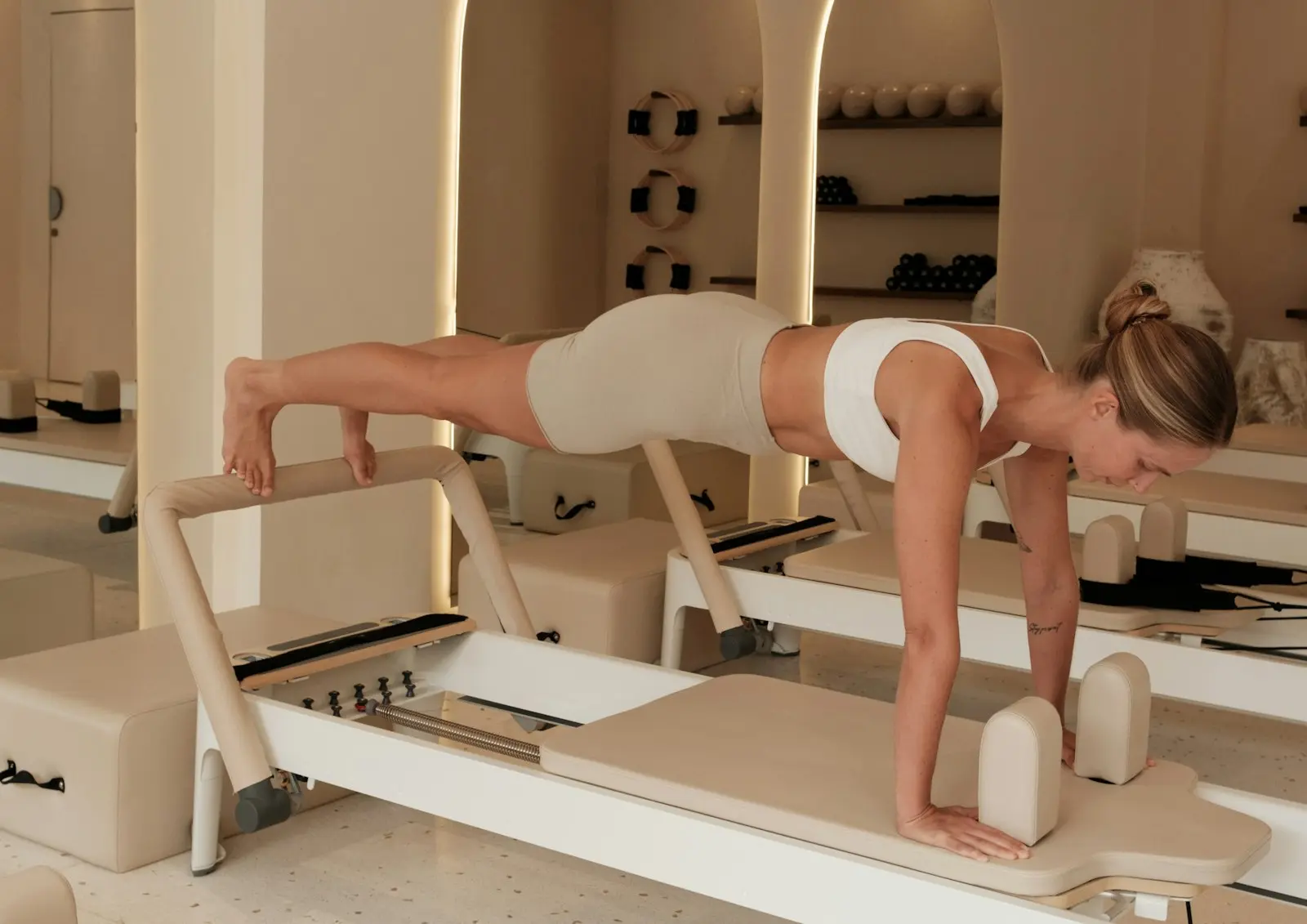
A good plank is one line from the crown of the head to the heels. To keep that line, think of lengthening rather than locking: as the crown reaches forward and the heels reach back, everything in between falls into place.
Three cues that change it
First, push the floor away. Press your palms or forearms down and lift your chest away from the floor. Let your shoulder blades spread across your back instead of sinking towards your ears.
Second, keep your breath. Holding it stiffens the trunk without supporting it. Breathe in through the nose and out through the mouth, and feel the abdominal wall draw gently in and up on every exhale.
Third, keep the pelvis neutral. Lifting the hips or sagging into the lower back both move the load to the wrong place. Lengthen your tailbone towards your heels and draw your lower ribs towards your pelvis.
In Pilates, the question is not how long you hold, but how well.
Next time, shorten the hold and sharpen the attention. Thirty careful seconds teach far more than two scattered minutes.
Let’s put these notes into practice, together in class.
Book a Class (opens WhatsApp)